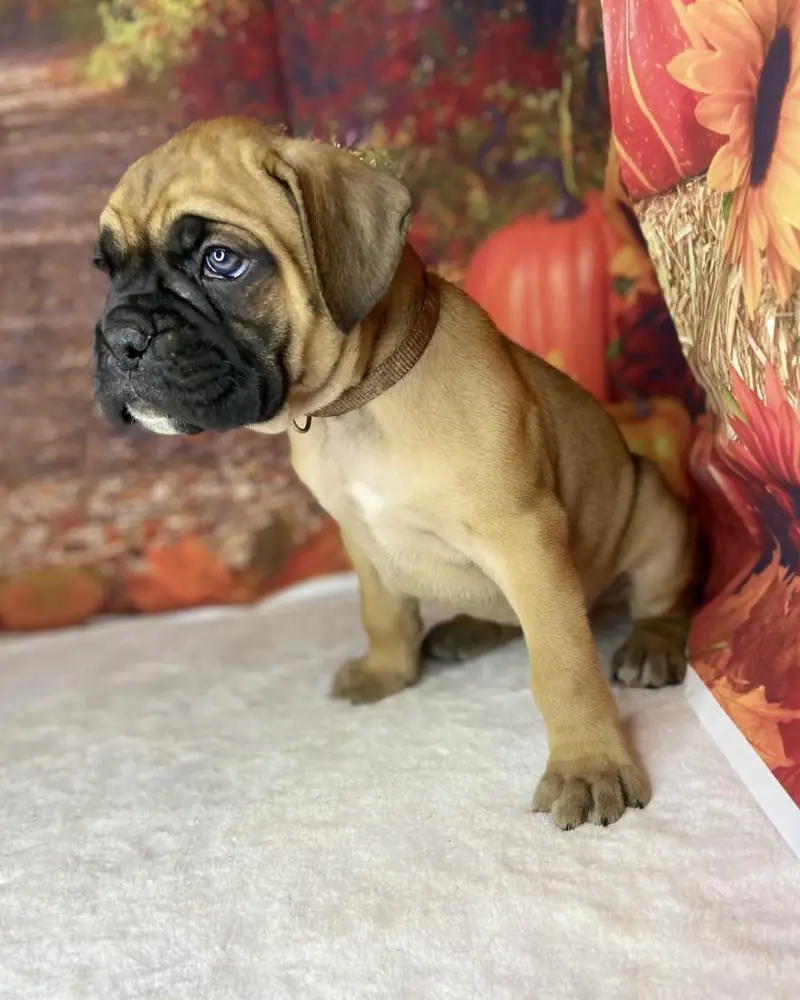
Mason
- SexMale
- ColorFawn
- Age9 weeks
$700Available
From Draco Boxers in Macedonia, Ohio. Updated 30 October 2026.
Boxer temperament, in a sentence: a strong, bouncy dog that loves its people, wants to be in whatever room they are in, and takes two or three years to grow up. Our Boxers live in the house with us and every litter is born and raised there, so what follows is the breed seen from the living room floor, not from a show ring.
Each answer leads with the short version. Breed facts come from the AKC breed standard and the American Boxer Club.
Affectionate, clownish and very physical. Ask the American Boxer Club to name the breed's defining trait and its answer is a hunger for human affection. Expect a warm weight leaning on your shins and a shadow following you from room to room.
In our house the puppies end up on the sofa and on blankets, and the grown dogs stretch out on a bed. Given the choice, a Boxer takes the spot nearest its people over a quiet corner of its own.
They are funny, too: a delighted Boxer often curls its body sideways into the shape owners call the kidney bean. The breed club adds that Boxers pick up the mood of their household, so a calm routine pays off.
No. Aggression is not part of the breed. The AKC standard pictures an alert, self-assured dog that is reserved with strangers at first and warms up quickly once someone approaches in a friendly way. Judges are told to penalize shyness severely, and nothing in that standard rewards a dog that goes looking for a fight.
Three ordinary Boxer habits are the ones that get misread:
Any dog can become aggressive, and in Boxers the usual roots are a poor start in life, too little exercise, pain, or friction between two adults of the same sex. If growling or snapping appears out of nowhere, have your vet check for pain first, then bring in a qualified trainer or behaviorist.
Yes, for an active family, with size as the one real caution. The AKC standard calls the breed patient and stoical with children, and the American Boxer Club describes Boxers keeping a protective eye on children at play. The AKC is also frank that the breed's excitability makes it a poor match for very small children and frail adults. A grown male weighs 65 to 80 pounds, and Boxers say hello by bouncing.
How it goes depends a lot on the age of your children:
A puppy of ours arrives already used to living in a home rather than a kennel building. House rules kept by every family member are what keep it gentle as it grows.
Often, as long as the first meetings are handled with care. The American Boxer Club rates the breed as good with other dogs when supervised. Play style is the sticking point: Boxers wrestle, shoulder-barge and swat, and a dog that prefers polite sniffing may not enjoy any of it. Two adult Boxers of the same sex can also clash, so a male and a female together is usually the easier mix.
With cats, the Boxer's age when they meet matters most. A puppy raised beside a cat generally accepts it as one of the household, even if its idea of play is clumsy. An adult that has never shared a home with a cat may see one as something to chase. Introduce them slowly, the dog on a leash, the cat with a high shelf or a gated room to retreat to. Even a Boxer that adores its own cat may still go after the one from next door.
Protective, yes. Guard dogs in the trained sense, no, and a family home does not need one. The AKC standard describes the Boxer as instinctively a hearing guard dog, and the breed club ranks hearing as its sharpest sense. Expect your Boxer to notice a car door in the driveway before you do, head for the window, and step between you and a stranger who seems wrong to it.
That same standard expects a good Boxer to respond promptly to friendly overtures. Open the door, greet your visitor warmly, and most Boxers switch from sentry to welcoming committee fast. Leave that balance alone. Praising a Boxer for barking or lunging at people does not make it a better protector. It makes it harder to live with, and protection work is a specialist trainer's field.
No, most are not nuisance barkers. In the American Boxer Club's description, a Boxer barks when there is a reason, such as a knock, an odd noise after dark or a delivery van, rather than for fun. Where Boxers are noisy is in conversation: sighs, grumbles, snorts and a sing-song "woo-woo" aimed at whoever is holding the leash or the food bowl.
A Boxer that starts barking a lot is usually telling you about its day: long hours alone, or missed exercise. A proper walk, a long-lasting chew and company fix more barking than any gadget.
Most adults can cope with a normal working day if they get real exercise before you leave, a break in the middle, and something safe to chew. Puppies cannot: they need short absences while they build bladder control and the confidence to be alone.
Whatever the age, a Boxer belongs indoors. The short, single coat gives little protection from cold or heat, and here in Northeast Ohio lake-effect winters and humid summers both make a backyard life a bad idea. A winter coat for snowy walks around Cleveland and Akron is a sensible buy.
Teach time alone in small steps from the first week at home:
True separation anxiety rarely fades without help, so talk to your vet if you see it. Our guide to bringing a Boxer puppy home picks up the first week.
A great deal, and the puppy stage lasts longer than most families expect. The American Boxer Club calls Boxers strong, quick, busy dogs that need plenty of exercise, and a healthy adult usually wants an hour or more of real activity a day. The breed is slow to mature, and many keep their puppy bounce until 2 or 3 years old.
| Age | Energy | What helps |
|---|---|---|
| 9 weeks to 6 months | Wild bursts, then deep naps | Short games, naps, chew toys |
| 6 months to 2 years | The peak: big, strong and full of opinions | Daily exercise and brief training |
| 2 to 3 years | Still playful, settling indoors | Longer walks and fetch |
| 3 to 7 years | Usually the easiest years | An hour or more of activity a day |
| About 8 and older | Slower and sleepier, still fun-loving | Gentler walks and closer health checks |
Two limits apply. Heat: the short muzzle makes it hard for a Boxer to cool down, so on sticky Ohio summer days walk early and late. Growth: a puppy's joints are still developing, so save long runs until it is grown; see how big Boxers get and when they stop growing for the timeline. The senior years are covered in how long Boxers live.
Smart, yes. Easy, not always. The AKC describes Boxers as very intelligent and eager to please, and also quick to get bored by repetition. A Boxer learns a new cue in a few tries, then decides whether the tenth sit of the morning is worth it. The brains are real: the AKC notes that Boxers were among the first breeds chosen for police training in Germany.
Keep sessions to five or ten minutes, pay well with food or a toy, and stop while your puppy is still keen. Harshness makes a Boxer dig its heels in; clear family rules and a sense of humor get far further.
Bold, curious and friendly, ready to come to people rather than hang back. The breed standard treats shyness as a serious fault, so a puppy that shrinks away from gentle handling is not showing typical Boxer character.
The puppies we have now share a warm temperament and a cool temper, and they are gentle with family. Each one has worn its own colored ID collar since its first days with its mother in the whelping pen, so we always know which puppy you are asking about. See them on our available Boxer puppies page, send your questions through the contact form, and when you have chosen, put that puppy's name on the puppy application.
Neither, as a rule. Males are bigger, so their bouncing takes more managing around small children, but the individual puppy and its upbringing count for far more than its sex.
Yes, if it gets out for proper exercise every day. A Boxer that has had its walk and its game is usually quiet indoors; boredom causes far more trouble than a small floor plan.
Most of the time it is not aggression at all, but the mouthing and rough play that are normal in Boxer puppies and fade with steady redirection to toys. A growl or snap that is new, or that keeps getting worse, deserves a vet check and a trainer's help.
Give it a real outlet, then a real rest. A short game or training session followed by quiet time in a crate or pen with a chew teaches a puppy to switch off, and an overtired puppy usually gets wilder, not calmer.
No. Temperament comes from breeding and upbringing, not from the shape of the tail or ears; our guide to Boxer tails and ears explains what docking and cropping involve.
 How Big Do Boxers Get? From Puppy to Full Grown BoxerHow big do Boxers get? Adult height and weight for males and females, a growth chart from 6 weeks to 2 years, when growth...Open the guide
 How Long Do Boxers Live, and How Can You Help?Boxer life expectancy is 10 to 12 years on average. What vet research shows, what most often cuts it short, and what...Open the guide
 Bringing Home a Boxer Puppy: The First Weeks and Early TrainingBringing home a Boxer puppy at 9 weeks: getting the house ready, the first night, crate size, potty training in snow...Open the guide
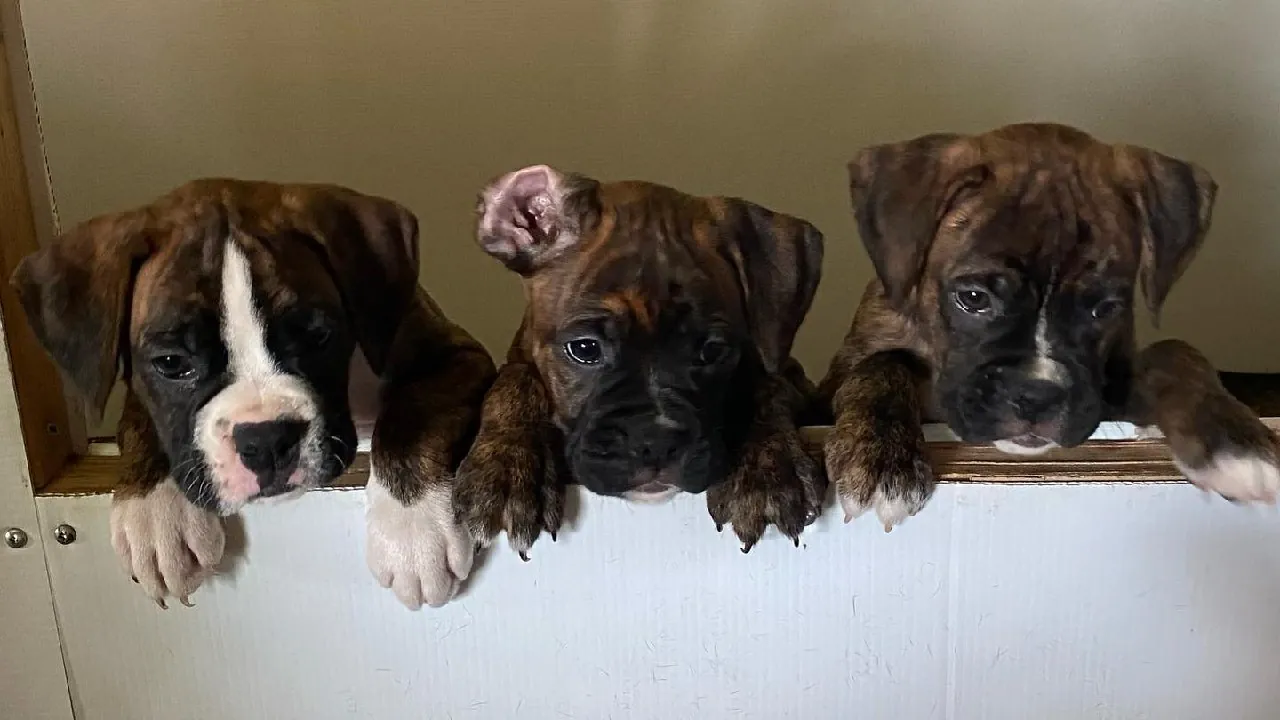 Boxer With a Tail or Docked? Tails, Ears and What to ExpectOur Boxer puppies go home at 9 weeks with docked tails and cropped ears.Open the guide
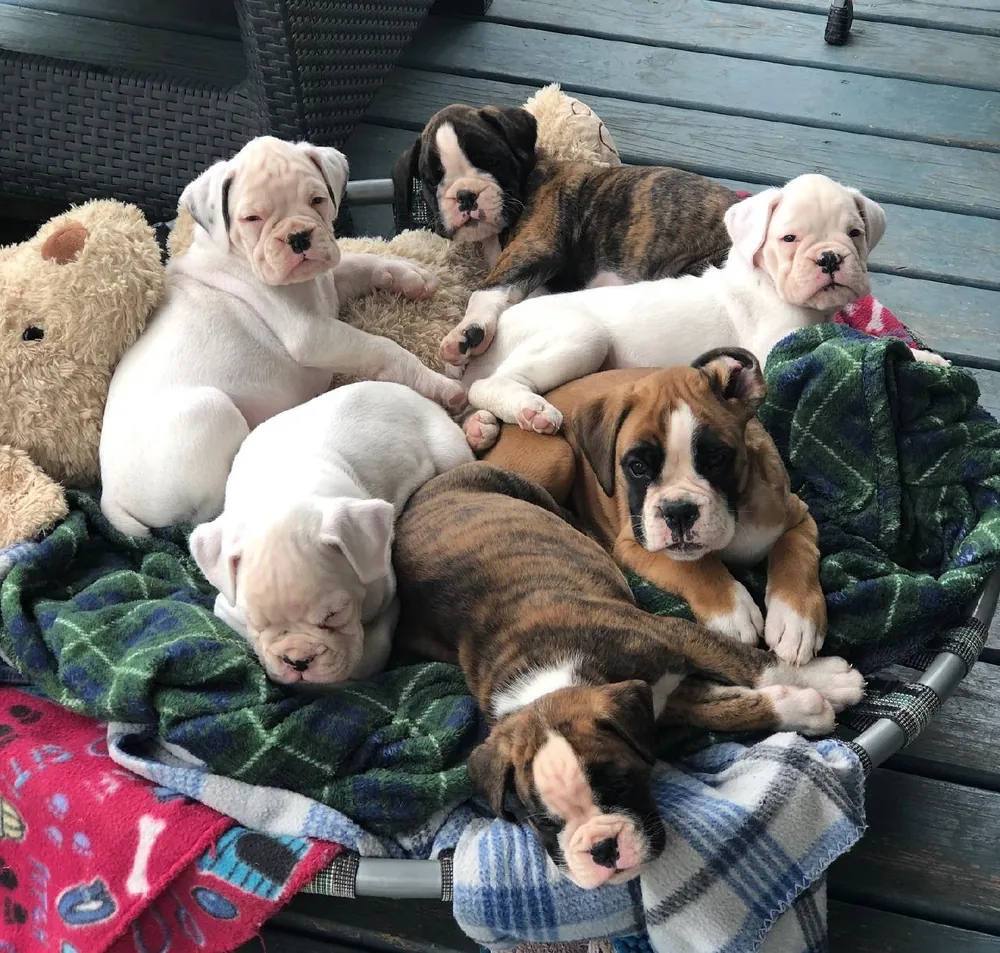 Available PuppiesEvery puppy we have right now, with photosView the puppies
 Boxer Puppies in OhioDrive times to Macedonia from around the stateRead more
Look through the puppies we have now, and send us whatever questions you still have.