
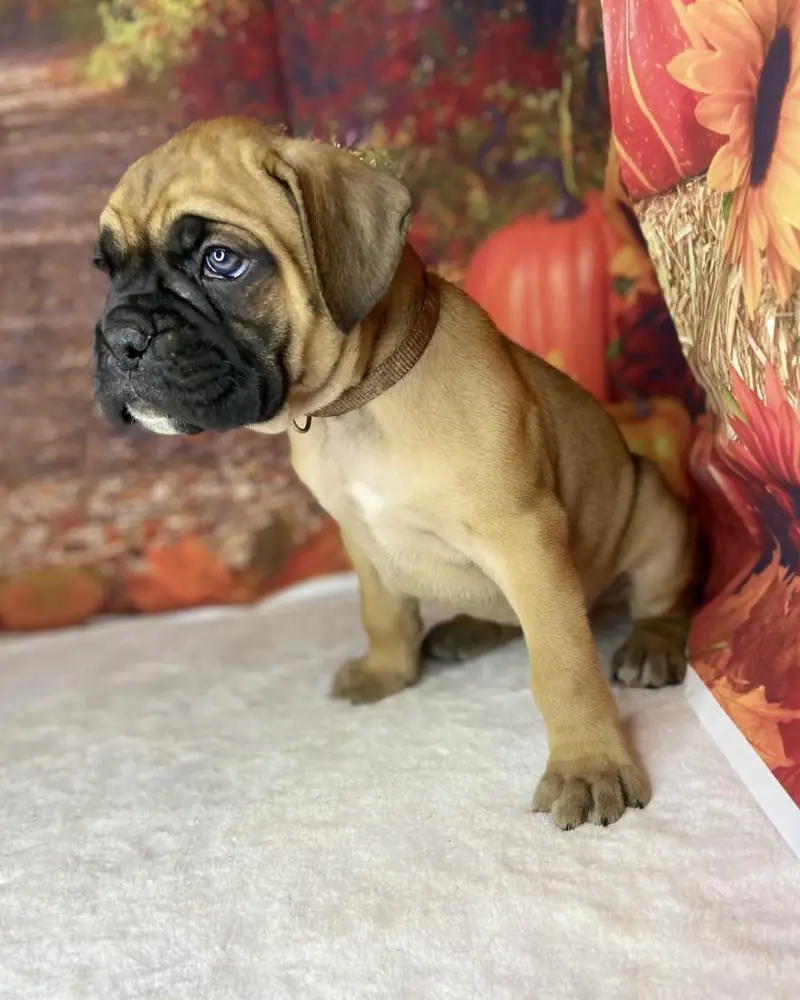
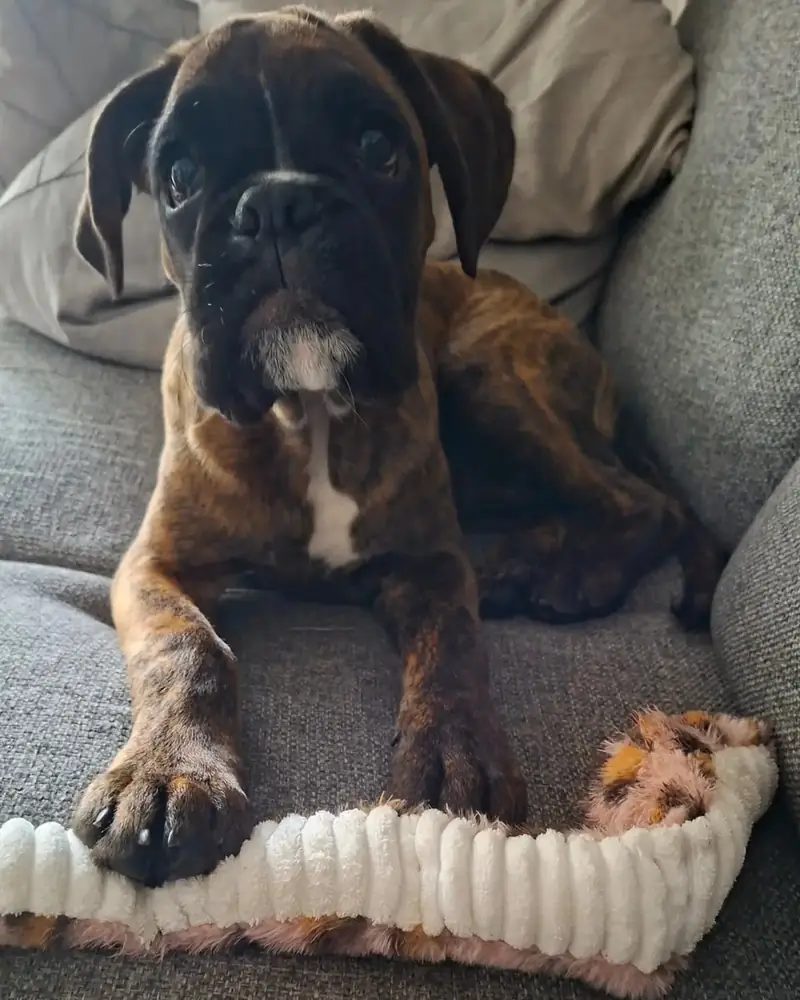
Mason
- SexMale
- ColorFawn
- Age9 weeks
$700Available
Two colors, many shades, and the white markings that make a puppy flashy.
Boxer dog colors look complicated online and simple in a whelping pen. Every puppy born in our Northeast Ohio home is fawn or brindle, the only two colors the AKC standard names, and some of them carry white as well, from a flash on the chest to a coat that is mostly white.
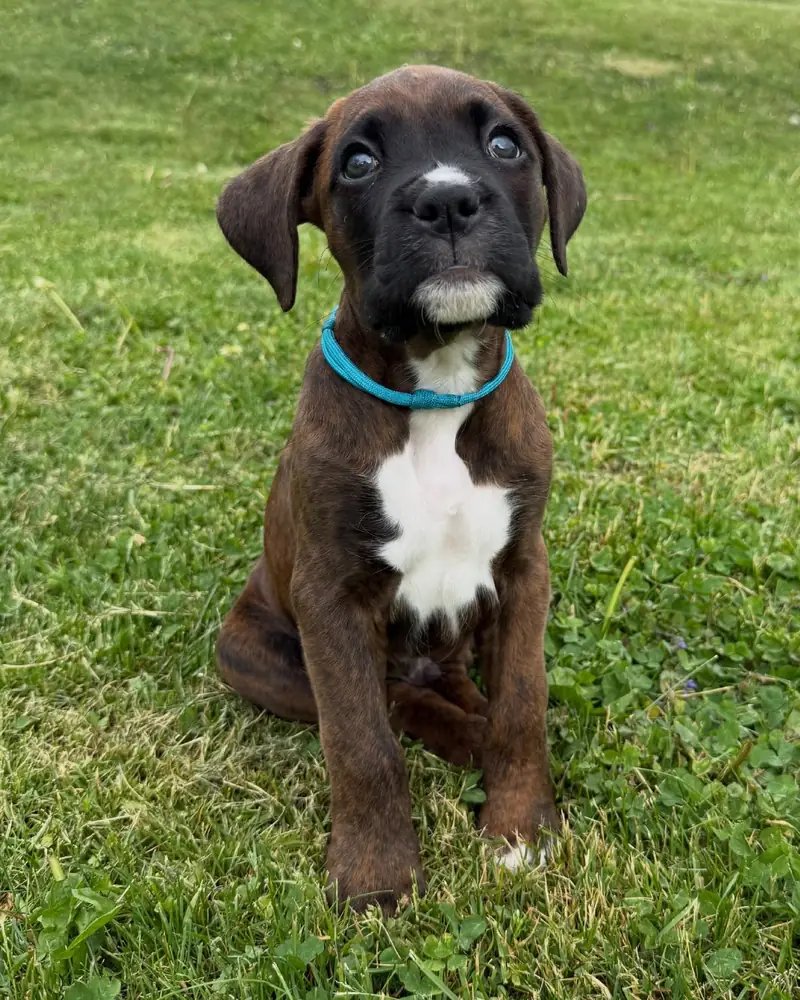
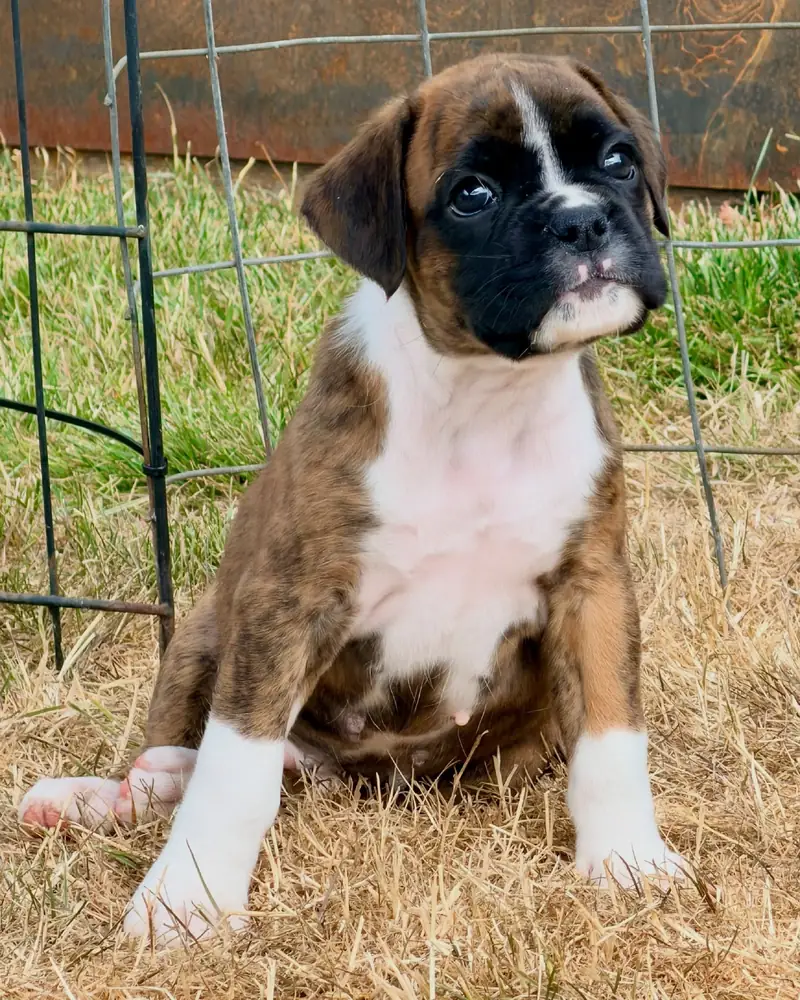
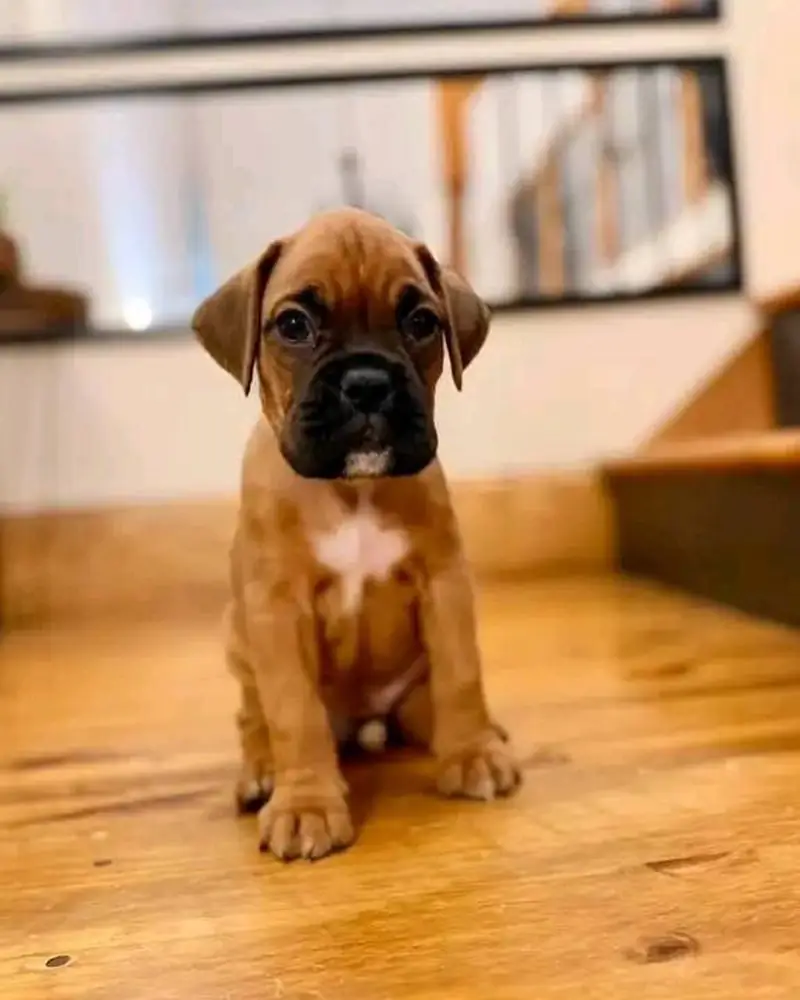
The five puppies we have now show it well: three fawns, Mason, Prince and Davira, and two brindles, Sam and Cassandra. Below you will find what each color really is, how a coat shifts between the pen and adulthood, and what color can and cannot tell you about a puppy.
Think of a Boxer coat in two layers. The base is fawn or brindle, fixed before the puppy is born. On top, some dogs carry white markings, anywhere from none at all to white over most of the body. The chart sets the names you will hear beside what they actually mean.
| Name | What you see | AKC standard | From our litters |
|---|---|---|---|
| Fawn | One flat shade, anywhere from light tan to deep red, plus a black mask | Accepted | Mason, Prince, Davira |
| Brindle | Black stripes over fawn, from light striping to reverse brindle | Accepted | Sam, Cassandra |
| Flashy | Fawn or brindle with white on the face, chest and feet | Accepted while the white stays within a third of the coat | Prince, Cassandra |
| White | Fawn or brindle underneath, with white over more than a third of the coat | Kept out of the show ring | Maple, now home with her family |
| "Black" | Nearly always a brindle so dark the fawn is hard to find | Solid black is not a Boxer color | None |
Plain coats, with little or no white, are every bit as correct as flashy ones, and the standard says a plain dog should not be marked down for it. Whatever the coat, the muzzle wears a black mask, which the standard treats as essential, though white on a flashy face may take over part of it.
One breed, whatever the coat, and color does not split it into types. When families ask us about types of Boxer dogs, they usually mean one of three things:
A plain fawn and a flashy brindle are the same breed in different coats, and one litter can hold both.
Not in a purebred. What you will meet instead are unusual names for the two ordinary colors. Golden, honey, tan and red describe how light or dark a fawn is, and in European terms the deepest fawn is deer red. Tiger, dark and reverse all describe brindle, the last meaning stripes so heavy that the fawn shows only as thin lines. For a brindle so dark it looks black, the American Boxer Club is fine with seal or black brindle and would rather breeders dropped "sealed," since the standard needs the fawn to show through.
Black, blue, chocolate and tricolor are a different matter. None of them appears in the standard, and according to the American Boxer Club the breed has no gene for a black coat at all. A puppy sold as a rare black or tri color Boxer is either a dark brindle with a new label or not a purebred Boxer. Either way, the word rare adds nothing to the dog.
The base color stays put. A puppy born fawn becomes a fawn adult, and stripes never turn up later on a dog born without them. Newborn fawns of a similar shade can be hard to tell apart, so each of our puppies wears its own colored ID collar from its first days.
What does move is how the color reads. The shade itself can warm up or pale a little while the puppy coat is replaced. Heavy brindle often looks close to black on a young puppy, then shows more fawn between the stripes as it grows, and daylight reveals it far better than a lamp or a phone photo. White markings never spread, and most look a little smaller once the chest and body fill out. The Boxer size guide charts that growth by age. Gray reaches the mask in later years, in every color.
No. Temperament is built by the individual puppy, its parents and its upbringing, and ours grow up in the house with the family, in a whelping pen beside their mother at first. The coat plays no part. Our fawns and brindles carry the same description, warm, cool-tempered and gentle with family, and Sam's dark stripes or Prince's white blaze tell you nothing about how either one will settle into your home.
If two puppies tempt you, read both puppy pages and send us your questions about each through the contact form. Leave color until last. The Boxer temperament guide explains what really shapes a Boxer's character.
Only where the coat is white. White hair usually grows over pink skin, and that skin can burn in strong sun. On a flashy puppy that means the white muzzle, blaze and chest, so keep it in shade around midday in June, July and August. A mostly white Boxer needs the same care over far more of its body.
Everything else is the same in every color: the food, the weekly brush, the exercise, and keeping a short-coated dog warm through a lake-effect January. Our guide to bringing a Boxer puppy home covers the first weeks for any puppy, fawn or brindle.
Yes. Fawns and brindles both wear the black mask over the muzzle. On a heavy brindle it blends into the stripes, and on a flashy dog white can replace part of it.
No. Tricolor is not a Boxer color, and neither is blue. A puppy sold under either name has a misleading label or another breed somewhere behind it.
Neither color is better. Gentleness with family comes from the puppy and its upbringing, which is why our fawns and brindles share the same warm, cool-tempered description.
Yes. Tell us through the contact form which color you are hoping for, or fill in the puppy application with the name of the puppy you have chosen. Each application gets read in full, and we answer by email.
$700Available

$700Available
$700Available
$700Available
$700Available
$700Available

$700Available

$700Available
$700Available
Tell us the color you love and whether you want a boy or a girl, and we will tell you which of our puppies fits.