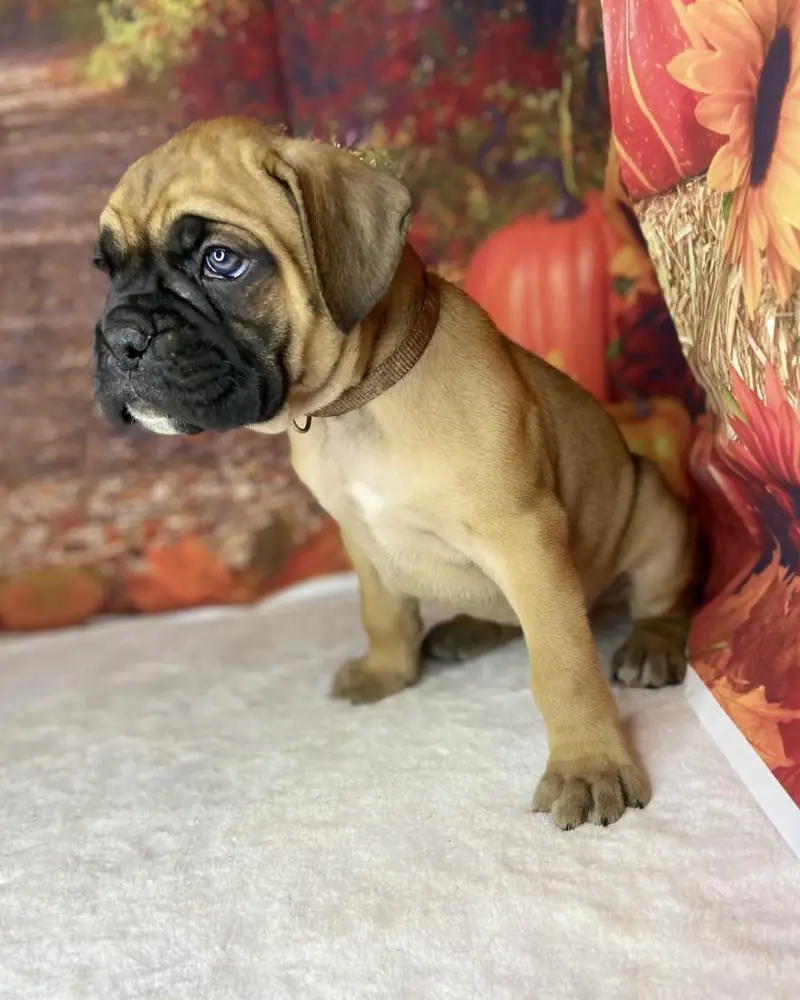
Mason
- SexMale
- ColorFawn
- Age9 weeks
$700Available
From Draco Boxers in Macedonia, Ohio. Updated 30 October 2026.
Every Boxer starts life with a long tail and soft, folded ears, and in much of continental Europe a Boxer with tail and natural ears is the usual look. Ours look different by the time they leave: each puppy goes home at 9 weeks with a docked tail and cropped ears, after a vet visit, carrying a health record of the vaccinations and deworming it has had so far.
For a family, that means the tail was settled in the puppy's first days, the ears were done before go-home, and what is left for you is the ear aftercare your vet sets out. Below, in plain terms: what docking and cropping are, when they happen, what the AKC, the FCI and UK law say, and how natural tails and ears look on Boxers elsewhere.
Yes, with a full-length one. A short tail on a Boxer is nearly always a docked tail. Left as it grew, the tail is set high, tapers to the tip, and is held up when the dog is on the move or excited. For the undocked version, the UK Kennel Club standard wants a tail "set on high and carried gaily, of moderate thickness."
A Boxer born with a short tail is a rarity. The natural bobtail lines in the breed trace back to a UK program that crossed a Boxer with a Pembroke Welsh Corgi, then bred the offspring back to Boxers for several generations. Outside those few lines, a stubby tail on a Boxer puppy in the US tells you it was docked.
Ours do, every one of them. Each puppy on our available Boxer puppies page leaves at 9 weeks with a docked tail and cropped ears. If you have your heart set on a Boxer with a long tail and natural ears, it is kinder to everyone to know that before you pick a puppy.
Here is what it means once your puppy is home:
Within the first few days of life, usually at two to five days old, while the tail is still small and soft. The tail is shortened to a stub, either by cutting or by banding, where a tight ring cuts off the blood supply until the end drops away. At that age it is normally done without general anesthesia, and that is one of the main reasons the practice is debated.
Docking belongs with a veterinarian, and we will not describe how to do it at home. A vet can stop bleeding, judge the length and deal with an infection if one starts, and some US states have rules on who may dock and at what age. It is also permanent. Shortening the tail of an older puppy or a grown dog is a much bigger operation under general anesthesia, and vets usually keep it for medical reasons such as a serious injury.
It is surgery, done by a vet with the puppy under general anesthesia. Part of each ear flap is trimmed away, and the cut edge is shaped and stitched so the ear can later be trained to stand. Cropping is done young, while the ear cartilage is still soft enough to shape. Many vets prefer not to crop older puppies, because firmer ears are harder to get upright. Our puppies have theirs done before they leave at 9 weeks.
Crops are not all the same length. A long show crop gives the tall, tapering ear you see on Boxers in the AKC ring, while shorter crops are common on family dogs. The longer the crop, the more time and work it usually takes to stand.
Follow your vet's aftercare, and stick with it. In broad terms, cropped ears go through two stages. The cut edges heal first. After that, the ears are usually taped or supported for a period of weeks to months so they set upright as the cartilage firms. Where a 9-week puppy is in that process depends on when its ears were done, so ask us when you agree the go-home date, and take the answer to your vet.
Good questions for that first vet visit:
Between visits, the everyday job is simple: keep any tape or supports clean and dry, look for redness, a smell or sores, and tell the vet early. Ears can wobble while a puppy is teething, so a droopy week is no reason to stop. How quickly ears stand varies a lot from puppy to puppy, and a small number never stand fully however carefully they are supported. Our guide to the first week with a Boxer puppy covers everything else about settling in.
Soft, folded and close to the head. The AKC standard describes the uncropped ear as thin, of moderate size and set high, lying flat and close to the cheek at rest and "falling forward with a definite crease when alert." The look is gentler and rounder than a cropped Boxer's, and the ears never stand on their own. They are not supposed to.
Natural ears ask very little of you. Check inside once a week, wipe the outer ear when it is dirty, and see a vet about redness, a bad smell or constant head shaking. In the US, uncropped ears are common on family Boxers and accepted in the AKC show ring.
For tails, the AKC breed standard approved in 2005 is strict and treats a natural tail as a serious fault: "The tail is set high, docked, and carried upward. An undocked tail should be severely penalized." For ears it is more relaxed. It says they "are customarily cropped" and then gives a full description of the uncropped ear, which is why natural ears are accepted in the ring.
Separately, the AKC has a general policy statement on these procedures. It calls ear cropping, tail docking and dewclaw removal, "as described in certain breed standards," acceptable practices "integral to defining and preserving breed character and/or enhancing good health," and adds that appropriate veterinary care should be provided.
Not every US body agrees. The American Veterinary Medical Association opposes cropping and docking done only for looks and has encouraged their removal from breed standards. There is no nationwide ban in the US, though some states set rules on who may carry these procedures out.
Because the rules there point the other way. The FCI standard, used across most of continental Europe, describes "natural ears" and a tail "of normal length and left natural," and many European countries ban cosmetic docking and cropping outright. So a German Boxer in a photo will usually have a long tail and folded ears.
Ear cropping is illegal in the UK. In England and Wales, the Animal Welfare Act 2006 made tail docking an offense from 2007, with exceptions only for medical treatment and certified working dogs of certain types, and Boxers are not one of those types. Docked dogs are also barred from shows where the public pays to get in. The Kennel Club standard now notes that the tail was "previously customarily docked" and describes both kinds.
| Where | Tail | Ears |
|---|---|---|
| AKC standard, US | Docked; an undocked tail is severely penalized in the ring | Customarily cropped; natural ears described in full and accepted |
| FCI standard, most of continental Europe | Normal length, left natural | Natural |
| UK | Docking an offense in England and Wales since 2007, apart from medical treatment and certified working dogs | Cropping illegal |
From a breeder who decides, before or just after a litter is born, to leave the tails alone. Docking happens in the first days, so a puppy's tail is settled long before it is old enough to be offered to a family. If a long tail matters to you, the question has to be asked early, ideally before the litter arrives. Ears are decided later, which leaves a little more time on that side.
Our puppies are not that option, since all of them go home docked and cropped. If that suits your family, look through the puppies available now, ask us anything through our contact form, and once you have chosen, the puppy application asks for the puppy's name. Whichever look you prefer, neither one changes a Boxer's nature: what a Boxer is like at home comes from breeding and upbringing.
At around two weeks old, when the sealed ear canals a puppy is born with open on their own. It is a normal stage of development and has nothing to do with cropping.
The surgery itself is done under general anesthesia, so the puppy feels nothing while it happens. The edges are sore as they heal, which is why vets give pain relief, and the support stage asks for patience from puppy and family alike.
No. Docking is permanent, so a puppy docked in its first days keeps a short tail for life.
Yes, in most of the country, because there is no nationwide ban. Some states set rules on who may dock and at what age, which is one more reason to leave it to a veterinarian.
It becomes much harder once the cartilage firms up, and many vets will not crop beyond early puppyhood because the ears are less likely to stand. A vet who crops Boxers regularly can tell you what is realistic.
Very little, but keep an eye on the tip. A happy Boxer can swing its tail into walls and crate sides hard enough to split the skin at the end, and a wound that keeps opening up needs a vet.
 Bringing Home a Boxer Puppy: The First Weeks and Early TrainingBringing home a Boxer puppy at 9 weeks: getting the house ready, the first night, crate size, potty training in snow...Open the guide
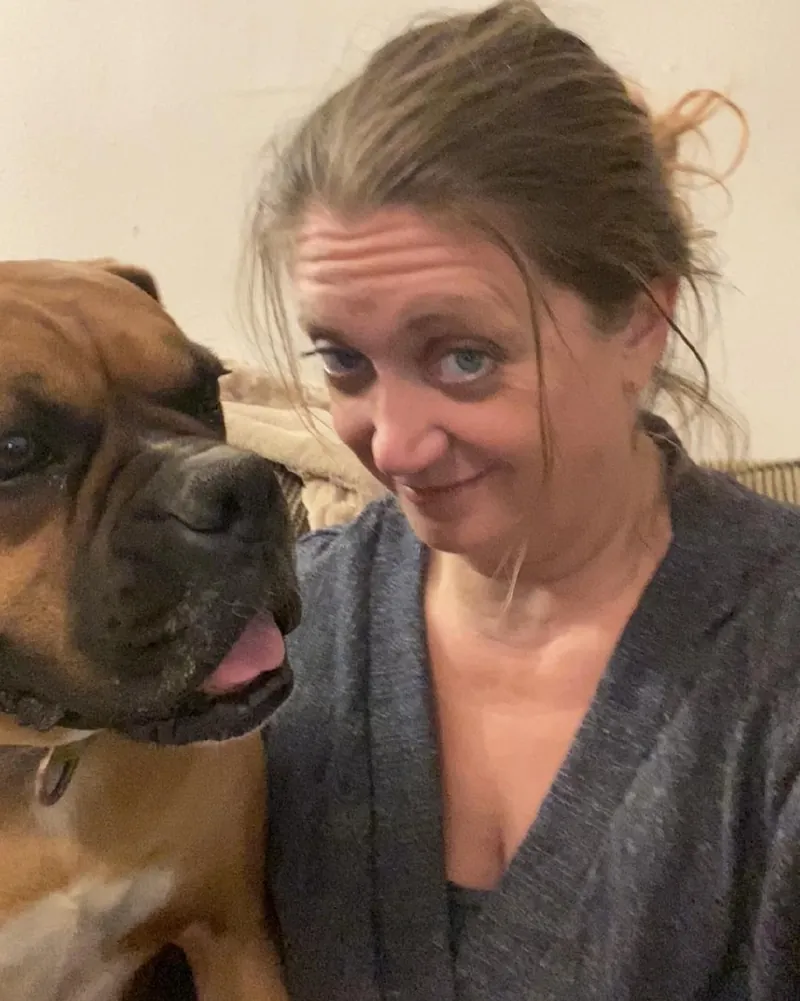 Boxer Temperament: What a Boxer Is Like at HomeBoxer temperament from a home where the dogs live indoors: children, cats, visitors, time alone, energy by age...Open the guide
 Health GuaranteeWhat the 1-year written guarantee coversRead more
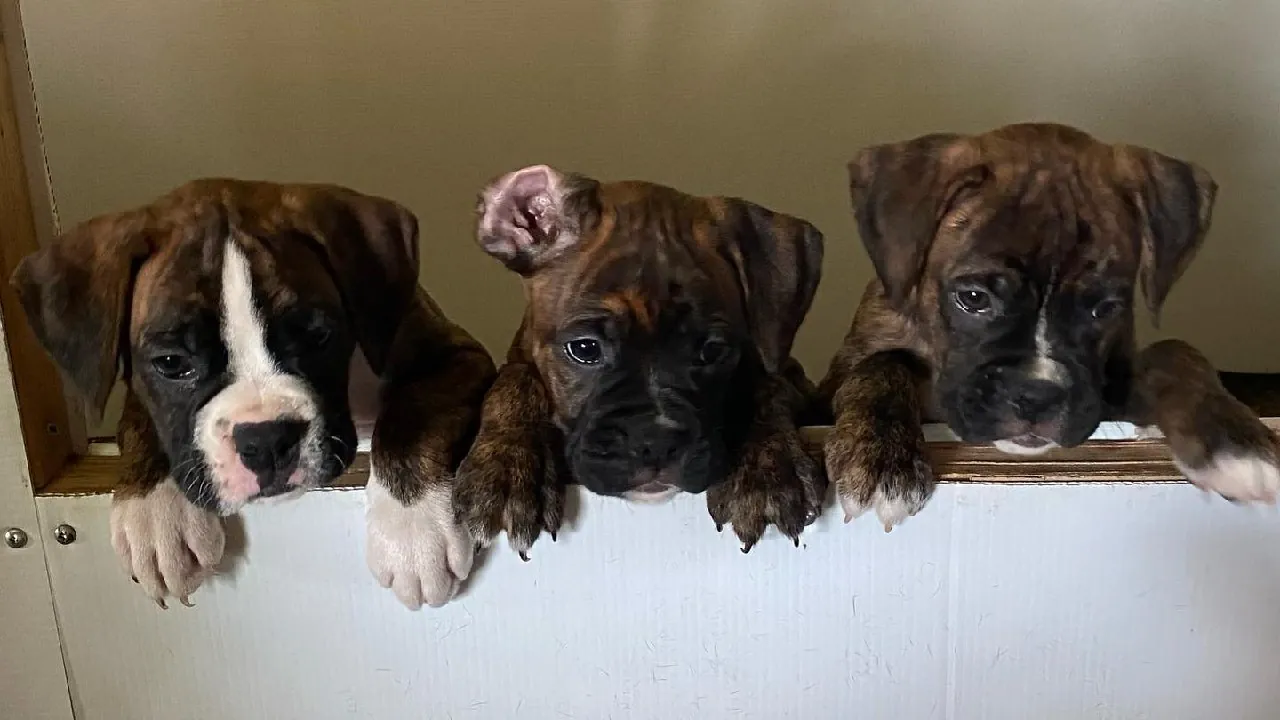 Available PuppiesEvery puppy we have right now, with photosView the puppies
 Getting Your Puppy HomeCollect in Macedonia, ground transport or a flight nannyRead more
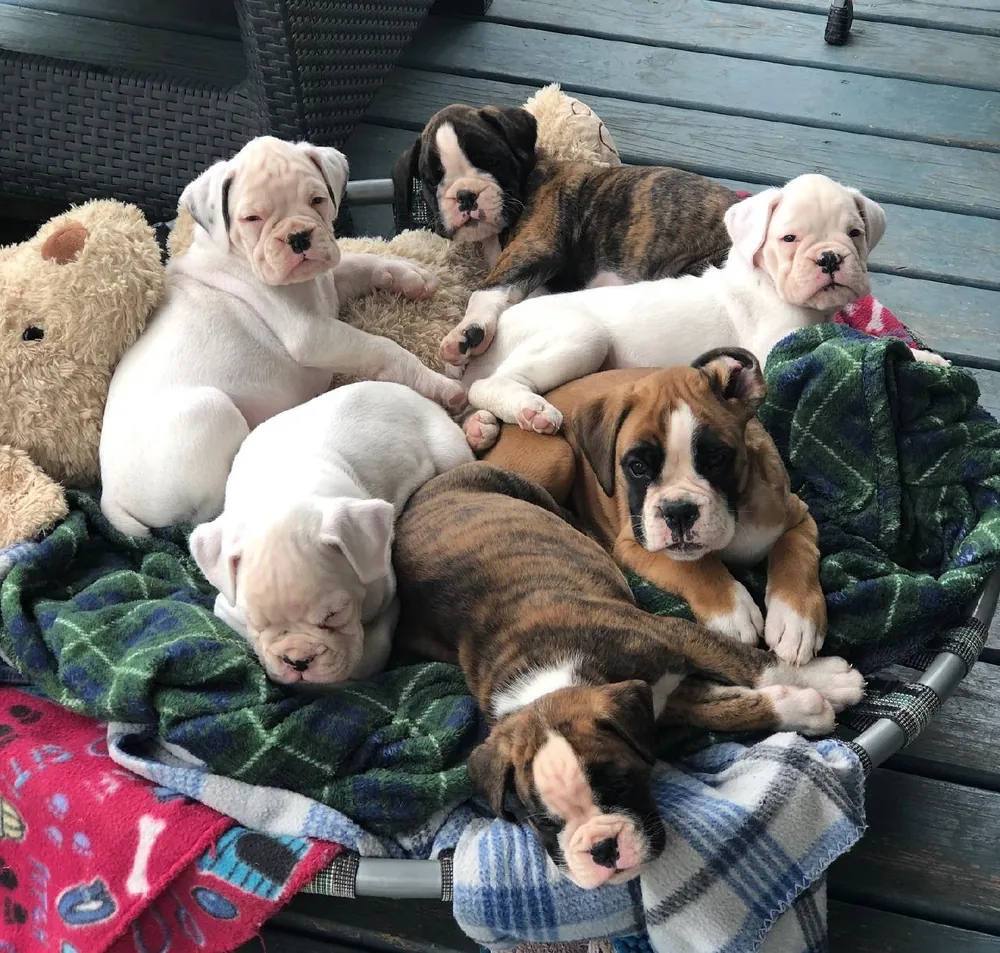 Boxer ColorsThe two breed colors, white markings and "black"About this color
Look through the puppies we have now, and send us whatever questions you still have.